You Lost Me
(by David Kinnaman)
I was looking through the books I had on our e-reader (I forget what I was looking for), when I came across one that I had downloaded several years ago, but never got around to reading: You Lost Me--Why Young Christians Are Leaving Church And Rethinking Faith. Having just watched a documentary called Divided about the problem of youth leaving the church, the topic was fresh on my mind. Like Divided, this books aims to diagnose the church drop-out problem and propose solutions. Unlike Divided, this book is backed by years of research and offers a more balanced point of view.
Monday, January 25, 2016
Monday, January 18, 2016
The Center of the Bible
Most modern scholars will tell you that the primary rule in approaching the Biblical texts is to look for what the original author was trying to say within his own time, culture, and context. That is, do not start out with "What does this mean to me?" or "What is this symbolic of?" or "What is the hidden meaning here?" Questions like these circumvent what the author is trying to say. Rather we should seek to understand the language and the culture and then let the text speak for itself.
Sunday, January 10, 2016
Why I Practice Communion
![]() |
| Photo Credit: Kurt Clark |
That's why I was wary of joining our local church in their practice of weekly communion for a long time. It seemed intellectually dishonest for me to participate in something that I believed had no real foundation. The Lord's Supper was Passover, not some new thing.
I began reconsidering my position when I read an article entitled Penal Substitution vs. Christus Victor by Derek Flood. The article challenges its readers to reconsider the way in which we think about atonement, but in the midst of this Derek pulls in the concept of communion:
Monday, January 4, 2016
The Double Mirror Experiment
![]() |
| Photo Credit: David Marcu |
If you value your sanity, I suggest you stop reading now.
Tuesday, December 29, 2015
Meta-Hermeneutics
I've ordered myself some material on hermeneutics and reading the Bible to help give me some foundation for this study I'm doing on the subject. Of course, when you're waiting for a good book to come in the mail, it always feels like forever before it gets here. In the meantime, I've been doing some thinking on the subject of meta-hermeneutics--or why we choose to read the Bible the way we do.
Tuesday, December 15, 2015
Made for Dancing
![]() |
| Photo Credit: |
There once was a king who was preparing for his son's wedding. So he went out to find guests to dance at the wedding feast. He sent letters to all the those who had trained in dance inviting them to his feast. He said, "Come dance before me, for my son is taking a bride." But on the day of the wedding no one showed up.
So the king went out and gathered all the lame, the blind, the deaf, the mute. He took men from the prisons and took slaves from their masters. He took the sick and the elderly and the young children. He took those who didn't know their right foot from their left foot. And he brought them all to the wedding feast and commanded them saying "Dance before me."
Sunday, December 6, 2015
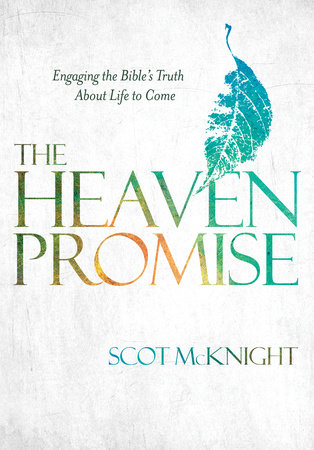
Book Review: The Heaven Promise
The Heaven Promise
(by Scot McKnight)
Here is yet another book to add to my "books about the Kingdom" shelf (one of my favorite topics). In The Heaven Promise, Scot McKnight (who is quickly becoming a favorite author) cuts past our cultural images and wild imaginations to see what does the Bible say about heaven? The answer is, actually, quite a lot.
Both the premise and the organization of the book are quite simple--you won't need a PhD to understand it. McKnight starts with some background about why we think about heaven and what various ideas are out there. Then, he moves into the six heaven promises that form the foundation of how we should think of heaven. These are pretty simple ideas like "God will be God" and "Heaven will be the utopia of pleasures."
(by Scot McKnight)
Here is yet another book to add to my "books about the Kingdom" shelf (one of my favorite topics). In The Heaven Promise, Scot McKnight (who is quickly becoming a favorite author) cuts past our cultural images and wild imaginations to see what does the Bible say about heaven? The answer is, actually, quite a lot.
Both the premise and the organization of the book are quite simple--you won't need a PhD to understand it. McKnight starts with some background about why we think about heaven and what various ideas are out there. Then, he moves into the six heaven promises that form the foundation of how we should think of heaven. These are pretty simple ideas like "God will be God" and "Heaven will be the utopia of pleasures."
Subscribe to:
Posts (Atom)